A pressure ulcer is a localized injury to the skin or underlying tissues that occurs when there is a decrease in blood circulation caused by pressure applied to a specific area.
Initially, a slight redness may be observed in the affected area (the first sign of tissue damage). The underlying tissues undergo changes due to poor blood supply. Several layers of skin, muscles and bones can be affected.
All patients who are immobilized due to chronic illness or during the post-operative period are exposed to a high risk of developing pressure ulcers.
As part of the patient care programme during their stay in hospital as well as at home, the patient and their family are informed about risk factors and preventive measures they should take to avoid the development of this type of ulcer.
If a pressure ulcer already exists, it is necessary to carry out wound management, combined with the application of advanced dressings and the use of pressure-relieving devices.
Risk factors:
The main cause of tissue damage leading to the development of pressure ulcers is the accumulation of pressure. Tissue damage is proportional to the intensity of pressure and the duration of capillary compression.
Other factors that contribute to the risk of developing pressure ulcers:
- Ageing
- Smoking
- Skin conditions: elasticity, oedema, dryness
- Tissue hypoxia, caused by underlying disease
- Nutritional abnormalities (overweight or underweight)
- Immunological abnormalities
- Neurological disorders
- Altered level of consciousness
- Incontinence
- Medication
- Reduced mobility, caused by pain, fatigue or stress
- Poor hygiene
- Lack of awareness of potential damage
Preventive Measures:
Changing the patient’s position:
One of the simplest and most effective measures is to frequently change the patient’s position.
- If the patient is unable to change position on their own, caregivers and healthcare providers should assist them.
- Bedridden people should change position at least once every two hours.
- A person in a wheelchair should change position at least every 15 to 30 minutes.
If a pressure ulcer has already formed, it is important to avoid subjecting it to additional pressure, either through repositioning or through the use of pressure-relieving devices. This will give the wound a better chance of healing.
Follow a healthy and balanced diet:
A healthy and balanced diet with adequate intake of proteins, vitamins and minerals helps prevent skin damage and will help wounds heal faster. If necessary, the patient may be referred to a nutritionist who will define an appropriate dietary plan for them.
Take care of your skin:
It is important to inspect the areas of skin that are at daily risk. You can use a mirror to see the parts of the body that are more difficult to observe, such as the thighs and heels. If you notice any changes or skin discolouration (permanent redness, brownish colour), you should contact your healthcare provider, GP or family nurse if you are at home, or one of your attending nurses if you are in a hospital or a care home.
At-risk skin:
Skin discolouration may indicate a grade 1 pressure ulcer, which must be properly treated before causing further skin damage that is often painful and usually takes a long time to heal.
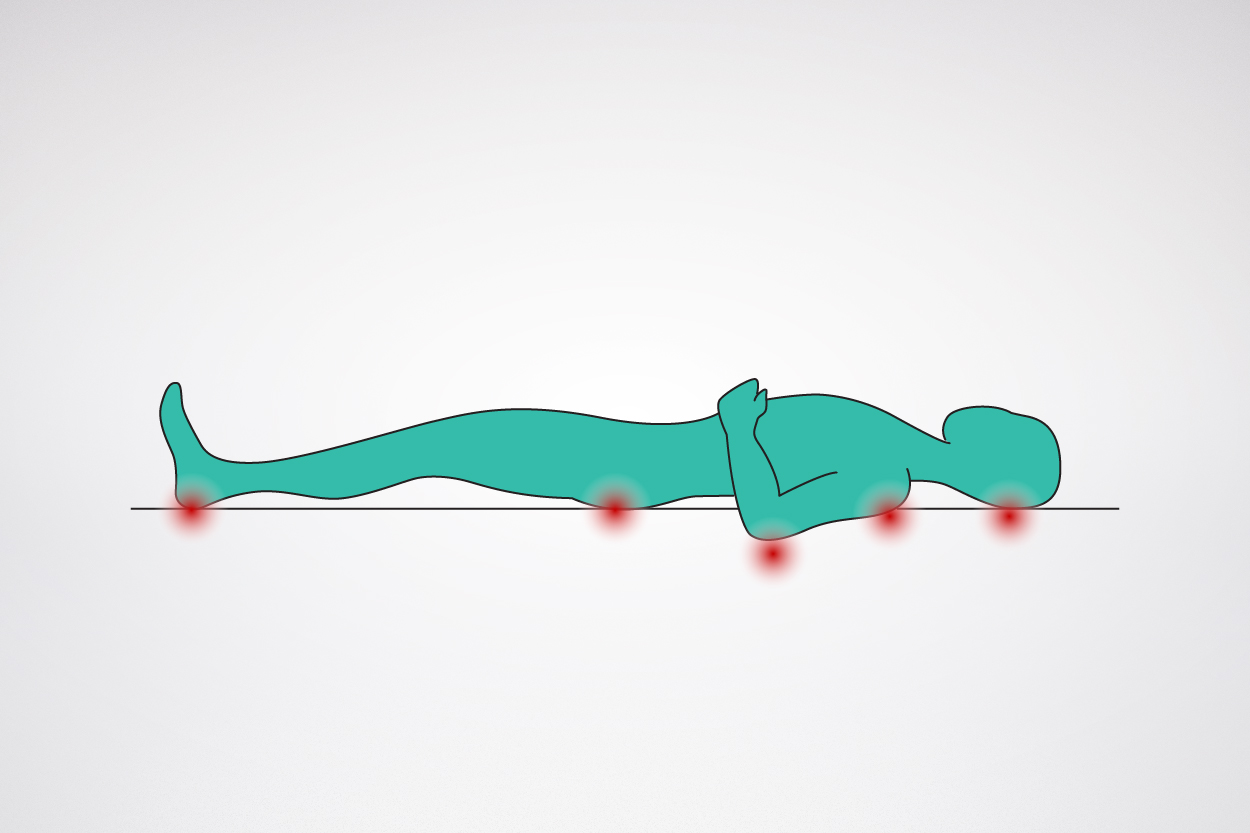
Elderly people generally have dry and fragile skin. Together with adequate hygiene, topical application of products containing essential fatty acids should be carried out, especially on at-risk areas such as the heels, buttocks and elbows (see the at-risk areas in the image).
Skin prevention and care:
MoliCare® Skin Dermoprotective Cream with Zinc Oxide

Contains creatine, zinc oxide (20%), amino acids and almond oil. Acts as a protective barrier in the genital area. With odour neutraliser.